


From trustworthy AI to intelligent autonomy
Introducing the newly labelled ITEA Call 2025 projects
We are very pleased to present the ITEA Call 2025 labelled projects: a diverse portfolio of 25 strategic and impactful proposals, that reflects our Community’s commitment to innovation and collaboration and gives a glimpse of where software innovation is heading.
Where last year’s Call demonstrated AI’s growing reach across sectors, ITEA Call 2025 marks a shift in depth and ambition towards AI that not only supports decision-making but increasingly participates in and acts upon those decisions. From agentic AI orchestrating smart factories (ARAMIS, SoSEng) and supply chains (SPASH, SafeChain) to LLM-driven platforms managing complex industrial environments (RESOPS, PROGEN), and autonomous multi-vehicle coordination (SwarmAI). We see this trend spreading across all sectors from manufacturing to healthcare and logistics.
The technology shift is not the only driver. Sustainability runs through more projects than you might expect at first glance. AIonBMS, MOTIONS, DESDIMI, iSMOP, VITRA, and SCENTINEL each approach it from different angles, focusing e.g. on batteries, fleets management, factory layouts, urban planning, sewer networks and so on, but the underlying logic is consistent: unlocking the potential of big data to reduce consumption and waste and improve efficiency.
Trust is the other word that keeps appearing. GLEAM, MIRAI-MDT, TRUST-SMI, and SafeChain all tackle what it means to deploy AI in critical environments, like hospitals, supply chains, mental health care, where the stakes of getting it wrong are real. Federated learning and privacy-preserving architectures are becoming standard expectations. AIDRM goes a step further by tackling authentication and proper rights management for AI models themselves.
The human dimension is also evident. GUIDE, ITMS, Emotional-AI, and TRUST-SMI all place people at the centre of their designs, using AI to augment human capability and well-being rather than replace human judgement. Meanwhile, ReliableStream and TelematiQ address the integrity of the digital fabric itself, building the trustworthy data foundations that next-generation mobility and media ecosystems will depend upon.
Taken together, the ITEA Call 2025 projects show a compelling picture of where software innovation is heading: towards AI that is agentic, accountable, privacy-respecting, and purposefully aligned with societal and environmental goals.
Curious to see what will be the next big thing? Read on and have a closer look at each project and the specific challenges they set out to solve.
| Domain | Projects |
|---|---|
| Smart Cities (2) | SCENTINEL, ViTRA |
| Smart Communities (3) | Emotional-AI, ITMS, ReliableStream |
| Smart Energy (1) | AIonBMS |
| Smart Engineering (6) | AI4CS, ARAMIS, BASEECS, PROGEN, SoSEng, SwarmAI |
| Smart Health (4) | GLEAM, GUIDE, MIRAI-MDT, TRUST-SMI |
| Smart Industry (3) | DESDIMI, RESOPS, SPASH |
| Smart Mobility (3) | iSMOP, MOTIONS, Telematiq |
| Safety & Security (3) | AI-CYBER, AIDRM, SafeChain |
ITEA Call 2025 labelled projects
Please find here below a summary of all the projects labelled under ITEA Call 2025.



AI-CYBER
Adaptive AI for Cybersecurity Threat Intelligence, Monitoring, Orchestration and Countermeasures
Project leader
University of Jyväskylä
(Finland)
AI-CYBER responds to the urgent need for more trustworthy AI-driven cybersecurity in environments where digital and industrial systems are increasingly interconnected. As critical infrastructures face growing vulnerabilities and AI-equipped attackers, existing monitoring solutions fall short in resilience, scalability and regulatory compliance. AI-CYBER develops an adaptive Cybersecurity AI Engine that shifts organisations from static, siloed protection towards a dynamic, intelligent and orchestrated defence framework that continuously learns and evolves in real time. By using distributed AI techniques such as Federated Learning, the project enables faster threat detection, proactive countermeasures, and stronger overall security across sectors, supporting resilience and uninterrupted operations.



AI4CS
Agentic AI for Critical System Software Development
Project leader
Aalto University
(Finland)
AI4CS tackles a key European challenge: accelerating the development of safety-critical software while ensuring strict compliance with standards in the transportation, medical, and industrial automation sectors, as well as the EU AI Act. Current processes, which rely heavily on manual verification and rigid workflows, slow down innovation and competitiveness. AI4CS introduces intelligent AI agents that act as both efficiency boosters and safety guardians, automating checks, detecting bugs, managing documentation, and keeping development stages in sync. This dual role enables faster, traceable development cycles and builds trust across complex, interconnected systems.


AIDRM
Security foundations for an AI Model Protection Solution
Project leader
Irdeto B.V.
(The Netherlands)
AIDRM addresses the growing risk of AI model theft, tampering, and misuse as organisations deploy AI in at the edge and in third-party environments. With no established equivalent of digital rights management for AI, model owners currently lack the technical means to protect their intellectual property or monetise it at scale. The project designs and validates a comprehensive framework that embeds protection mechanisms into existing AI and MLOps workflows. Using trusted execution environments, cryptographic licence binding and secure attestation, AIDRM safeguards AI models while enabling flexible licensing, positioning Europe as a strong player in AI model protection and commercialisation.

AIonBMS
AI-Enhanced Smart Battery and Energy Management Systems for Sustainable Energy Storage
Project leader
Wattvise
(The Netherlands)
AIonBMS tackles key challenges in Europe's shift to renewable energy, including grid congestion, cybersecurity risks, and technological dependence, by delivering an AI-enhanced, secure, and interoperable battery and energy management ecosystem. Moving beyond fragmented, rule-based battery management and energy management solutions, it brings together smart battery monitoring, predictive safety, anomaly detection, and explainable optimisation across device, network, and platform layers. Modular and licensable, the solution will be validated across residential, industrial, and flexibility settings across three countries. AIonBMS strengthens resilience, regulatory alignment, and Europe's competitiveness in advanced battery intelligence and secure energy software.

ARAMIS
Agentic AI platform based on MPC Integration and Interoperability for the IIoT
Project leader
ERSTE Software Limited
(Türkiye)
ARAMIS develops an agentic AI platform for the Industrial Internet of Things, addressing the systemic fragmentation and limited interoperability in smart factories. By overcoming the constraints posed by heterogeneous devices and industrial communication protocols, the project enables seamless end-to-end automation. Its core innovation, the Model Context Protocol, provides structured system context to Large Language and Large Reasoning Models, enabling secure, reliable, and accountable interactions across multi-vendor environments. ARAMIS will reduce the need for human intervention, increases throughput, and establishes a scalable foundation for intelligent, interoperable manufacturing.


BASEECS
Behavioral Analysis and Simulation for Environmentally and EConomically-sustainable Systems
Project leader
Linköping University
(Sweden)
BASEECS delivers a structured methodology, supported by modelling and open simulation standards, to better understand how cyber-physical systems affect society and the environment. By embedding sustainability and resilience into model-based systems engineering practices, it integrates requirement verification, traceability, and real-time monitoring throughout a system's entire lifecycle. By extending established tools and aligning with standards, the project enables informed design trade-offs and collaborative decision-making. Validated across aerospace, manufacturing, and energy sectors, BASEECS supports the development of systems that are economically viable, longer-lasting, and more resource-efficient.


DESDIMI
DEvelopment of a System for continuous and DIgital factory optiMIzation during the operation phase
Project leader
Contact Software GmbH
(Germany)
DESDIMI delivers continuous, performance-driven optimisation of production facilities during live operation, replacing slow and fragmented replanning processes. At its core is a comprehensive Digital Factory Model within a Common Data Environment that maintains an always up-to-date representation of the factory by combining laser scans, vision, and IoT data with existing enterprise systems. AI-generated layout optimisation is integrated with automated simulation and multi-fidelity validation in a continuous feedback loop, refining scenarios to meet throughput, energy, and space targets. Expected impact include over 50% reduction in baseline creation time, up to tenfold more evaluated layout variants, and substantial energy and resource savings.

Emotional-AI
Emotional AI for Thriving Communities
Project leader
Wassati
(France)
Emotional-AI addresses the engagement gap faced by organisations that rely on superficial sentiment analysis and lack insight into the deeper emotional drivers shaping stakeholder behaviour. The project delivers an open-source, multimodal framework that analyses text, voice, and brainwave data to uncover the root causes of collective emotions. Core innovations include a deep cause analysis engine, a holistic values model, AI-powered well-being metrics inspired by Gross National Happiness, and an action-oriented recommendation engine. Together, these enable organisations and communities to measure and improve collective alignment, notably towards the UN Sustainable Development Goals.


GLEAM
Green Learning for Eco-Conscious Medical AI
Project leader
HealthTalk.ai
(The Netherlands)
GLEAM develops a modular, energy-efficient, and privacy-preserving AI framework for healthcare. Tackling both the environmental impact of AI computing and strict data privacy regulations, it combines green AI and privacy-by-design principles to enable compliant collaboration across institutions while maintaining full data sovereignty. The architecture brings together lightweight AI models, Federated Learning and Synthetic Data Generation, supported by hardware-aware optimisation, dynamic workload scheduling and advanced encryption. Built on standards, GLEAM integrates seamlessly into clinical workflows. The project will validate its sustainability, interoperability, and clinical performance through multinational pilots.


GUIDE
Guidance Platform for People with Disabilities (PwD) through Digital Empowerment
Project leader
Scenwise
(The Netherlands)
GUIDE advances accessible navigation through an intelligent, multimodal platform supporting seamless indoor and outdoor mobility, particularly for people with disabilities. Combining GIS, AI, computer vision, and digital twins, it creates a comprehensive digital walking network that integrates tactile paths, points of interest, and real-time accessibility data. This network connects with public transport systems, indoor positioning, and a personalised AI assistant that delivers adaptive, step-by-step guidance and location-based safety alerts. Dynamic rerouting and user feedback ensure resilience to disruptions, supporting inclusive and data-driven urban mobility.

ITMS
Intelligent Tutor Matching System
Project leader
TutorBright
(Canada)
ITMS develops an AI-powered human-to-human matching learning platform that intelligently connects learners with suitable educators, mentors, or tutors. Using advanced data analytics and machine learning, it establishes a continuous feedback loop that learns from session outcomes and user input to refine future matches and personalise learning in real time. By combining adaptive learning models with meaningful human interaction, the system optimises both pairing quality and instructional pathways, adjusting to each learner's progress, motivation, and skill development. The result is an evidence-based, AI-assisted education ecosystem that strengthens engagement and long-term learning effectiveness.


MIRAI-MDT
Next-Generation AI-Enhanced Radiology and Clinical Intelligence for Oncology MDT
Project leader
Open Line Vitaly d.o.o.
(Slovenia)
MIRAI-MDT strengthens oncology decision-making by embedding explainable AI into multidisciplinary team workflows. Addressing fragmented data flows and rising diagnostic workloads, it delivers a secure, interoperable platform that structures and supports validation of clinical information across radiology, pathology, and other clinical systems. A multilingual clinical language model converts free-text reports into standardised data, while a video-based ultrasound AI engine supports real-time lesion assessment. Privacy-preserving federated learning enables collaboration across hospitals without sharing patient data. MIRAI-MDT will improve diagnostic consistency and reduces clinician workload.

MOTIONS
Monitoring & Optimizing Transport in Last-Mile Deliveries with Intelligent Onboard Systems
Project leader
UZAY TECH BILISIM ARASTIRMA MUHENDISLIK HIZMETLERI SANAYI VE TICARET ANONIM SIRKETI
(Türkiye)
MOTIONS delivers an AI-driven platform to enhance the sustainability, safety and efficiency of electric and connected vehicle fleets. Combining behavioural analytics, edge computing and route optimisation, it transforms real-time driver and vehicle data into actionable operational insights. The system enables logistics operators, vehicle manufacturers and public transport providers to reduce energy consumption, improve driving safety and optimise route and mission planning. By embedding data-driven decision-making into fleet management, MOTIONS supports cleaner urban logistics and more efficient electric mobility ecosystems.

PROGEN
Product Line Engineering with Generative AI for Safety-critical Edge-Devices
Project leader
Infineon Technologies AG
(Germany)
PROGEN addresses the growing complexity of managing thousands of product variants in the medical, industrial, and automotive domains, where cost, delays and compliance risks slow down innovation. It delivers an edge-native platform combining generative AI with policy-guarded compliance checks. While AI interprets requirements and proposes design options, embedded rules enforce safety and security constraints. By using live data from devices and digital twins, PROGEN enables early design exploration with clear, traceable trade-offs across cost, time-to-market, power, reliability, and regulation.
RESOPS
Resilient Operations for Industrial Processes
Project leader
ABB AB
(Sweden)
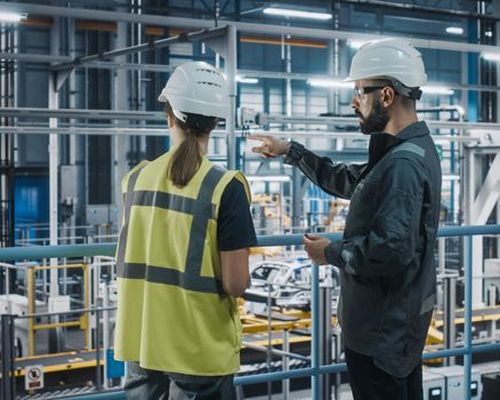
RESOPS addresses the challenge of supporting human operators in increasingly automated industrial plants. As automation reduces routine involvement, operators face high cognitive pressure during rare but high-impact events, often without sufficient situational awareness or recent hands-on experience. The project explores AI-driven support through intelligent agents capable of rapid context interpretation, advanced reasoning, and dynamic adaptation of human–machine interfaces. By strengthening human-AI-automation collaboration, RESOPS enhances decision-making in critical situations, improving safety, resilience, and operational continuity.

ReliableStream
Reliable Services and Infrastructures for Streaming
Project leader
Fraunhofer
(Germany)
ReliableStream develops an open, distributed streaming platform for authentic, tamper-resistant video content. Addressing deepfakes, misinformation, copyright violations, and the risks of centralised platforms, the project enables secure verification of media origin while supporting new forms of creative collaboration. It allows edited and personalised video variants to be generated from multiple trusted sources for individual users. Key outcomes include an open platform standard, authenticity-enabled cameras, advanced fake detection tools, and AI-based content variant generation technologies preserving the overall narrative, fostering a trustworthy and decentralised digital media ecosystem.

SCENTINEL
Smell-aware City Environmental Network: Telemetry & Intelligence for Waste and Wastewater Management
Project leader
Tom PIT d.o.o.
(Slovenia)
SCENTINEL addresses the impact of odour on urban quality of life and the efficiency of waste and wastewater management. Current fixed-schedule approaches overlook odour-related signals that better reflect sanitary risks and citizens’ experience, leading to complaints and unnecessary interventions. SCENTINEL uses AI-driven predictive analytics and multi-source spatial data to shift from reactive to preventive operations. IoT sensor streams feed a GIS-based digital twin of sewer networks, where advanced models deliver real-time risk assessment and decision support for utilities and municipalities.

SPASH
Smart Packaging and Shipment
Project leader
OnBT
(Türkiye)
SPASH develops an intelligent system to enhance visibility and control across the supply chain by providing real-time information on package contents, route, and status from production to consumer delivery. By integrating advanced sensing and communication technologies, SPASH strengthens product safety and traceability while promoting sustainability throughout logistics operations. The project implements a smart, secure, and autonomous logistics ecosystem that leverages cutting-edge technologies in IoT, agentic AI, cybersecurity, and Digital Product Passports (DPPs). By this way, it transforms traditional packaging into a cyber-physical system (CPS) capable of sensing, communicating, and acting autonomously.

SafeChain
Federated AI Agent–Driven Hazard Management Platform for Resilient Supply Chains
Project leader
inosens
(Türkiye)
SafeChain delivers a privacy-preserving, federated AI agent-driven hazard management platform to strengthen the resilience of pharmaceutical, agricultural and marine product supply chains. The solution enables real-time detection, prediction and mitigation of risks such as pesticide presence, contamination, spoilage, fraud and logistics disruptions. By combining secure data sharing with intelligent analytics, SafeChain supports proactive decision-making and reduces economic losses while safeguarding public health.


SoSEng
System of Systems Engineering and Control with LLM-based Agent Networks
Project leader
Demag Cranes & Components GmbH
(Germany)
SoSEng advances the engineering and control of complex, interconnected systems through LLM-based agent networks to shorten innovation cycles in manufacturing and logistics. Traditional automation systems are extended with intelligent agents capable of autonomously executing sub-tasks or providing advisory support in managing complex environments. Agents access production resources through a structured protocol, while critical decisions remain subject to human authorisation and clear role-based permissions. Demonstrators in intra-logistics, robotised production cells and maritime logistics will validate this flexible, dynamically reconfigurable approach.
SwarmAI
Autonomous AI-powered Swarm Platform for GNSS-denied Scenario-critical Civil Tasks
Project leader
SemLab
(The Netherlands)
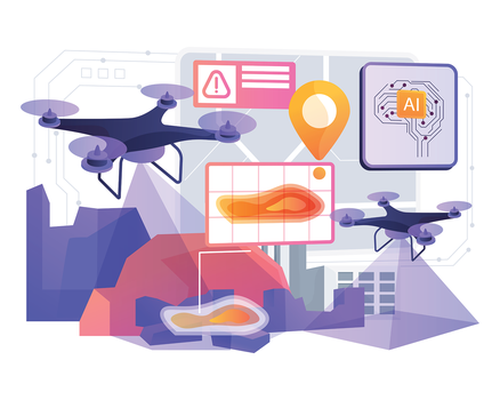
SwarmAI delivers an autonomous, interconnected edge-AI backbone for coordinating large-scale swarms of vehicles across air, ground, and maritime domains, even under uncertainty and sparse connectivity. Unlike centralised, vendor-specific solutions, it enables heterogeneous vehicles to perceive, decide, and act collaboratively through resilient mesh communications and peer-to-peer coordination. The architecture integrates multi-sensor fusion, navigation without reliance on GPS, and decentralised AI control, all within a cybersecure, auditable framework featuring standard interfaces and human-in-the-loop governance.

TRUST-SMI
Trustworthy AI for Smart Multimodal Health Intelligence
Project leader
MEDrecord BV
(The Netherlands)
TRUST-SMI develops a trustworthy, privacy-preserving and sustainable AI framework for smart multimodal health intelligence, targeting early detection and prevention of mental health relapse. Addressing severe depression, bipolar disorder, and cancer-related psychological distress, it combines speech analysis, medical imaging, wearable sensors, and clinical records into a unified predictive ecosystem. Acting as an intelligent co-worker within healthcare infrastructures, the system provides real-time insights to support early relapse prevention, treatment optimisation, and sustained behavioural change.

TelematiQ
AI-Driven Mobility Intelligence Platform
Project leader
GeoMate
(Canada)
TelematiQ develops an AI-powered, interoperable platform that transforms heterogeneous mobility data into real-time, simulation-ready intelligence. It integrates telematics, cameras, IoT sensors, and geospatial imagery into a unified layer that continuously updates high-fidelity digital twins. Advanced deep-learning architectures enable feature fusion, anomaly detection, and spatial-temporal reasoning. The project delivers an end-to-end ecosystem connecting data providers, AI analytics, and simulation and validation platforms. This supports AD/ADAS development, accelerates the adoption of trustworthy, data-driven mobility technologies, and lays the foundation for next-generation intelligent transport systems.

ViTRA
Virtual Twins, Real Sustainability with AI Powered Collaboration
Project leader
duSoft Yazılım A.Ş.
(Türkiye)
ViTRA is an AI-powered virtual twin platform transforming cities into living, intelligent systems. By unifying fragmented BIM, GIS, IoT, and energy data, it enables predictive, explainable, and sustainability-driven decision-making across urban design and operations. Through its multi-agent AI and Virtual Twin Framework, ViTRA empowers architects, planners, and energy operators to simulate, optimize, and validate real-world impacts before construction. It shifts cities from reactive planning to proactive intelligence—reducing emissions, accelerating approvals, and enhancing transparency. Ultimately, ViTRA turns data into actionable insight, enabling climate-resilient, efficient, and human-centric urban ecosystems aligned with the EU Green Deal and UN Sustainable Development Goals.
iSMOP
Intelligent Shared Mobility Orchestration Platform
Project leader
Avant car ltd
(Slovenia)
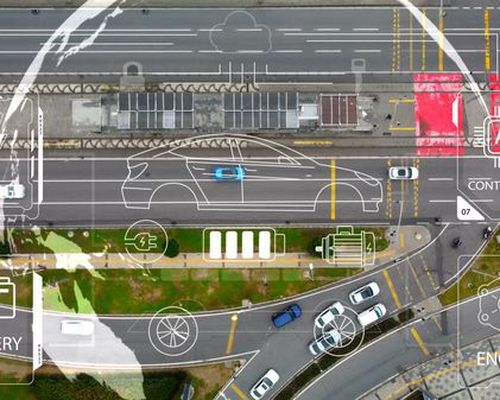
iSMOP, the Intelligent Shared Mobility Orchestration Platform, transforms fragmented shared electric mobility operations through a unified framework that dynamically coordinates vehicle relocation, charging, and maintenance under real-world constraints of capacity, legality and fairness. Built on a dedicated knowledge graph, its AI-driven orchestration layer creates a semantic decision space unifying mobility, energy and service data. By integrating demand forecasting, optimisation, and incentive learning, iSMOP balances availability, energy cost, and efficiency while preserving privacy. Pilots will confirm a coherent, self-optimising system that improves reliability, profitability, and urban sustainability.
