

Eureka Impact: Priming the brain for peak performance
Tennis player Roger Federer urges us to forget the last game point we lost to focus on the one in hand. New software developed by Lithuanian researchers in the ITEA project INNO4HEALTH can support here, training our mind to help our body achieve its best play.
Why practice does not always make perfect
When tennis player André Agassi was seven years old, he hit ball after ball fired out by a machine he called “the dragon”, which his dad had modified to send out faster than the original design.
It is this kind of gruelling physical repetition, told in Agassi’s memoir Open, that we often imagine when we think of what creates an elite athlete. However, what goes on in our mind is equally as important for tournaments as physical practice, psychological studies suggest. In fact, moving up the tennis rankings may be possible off the court, without even touching a ball, says a team of Lithuanian researchers.
“It is about training your brain muscles, your cognitive skills, whatever kind of athlete you are,” says Liepa Bikulčienė, a mathematician from the Kaunas University of Technology Lithuania.
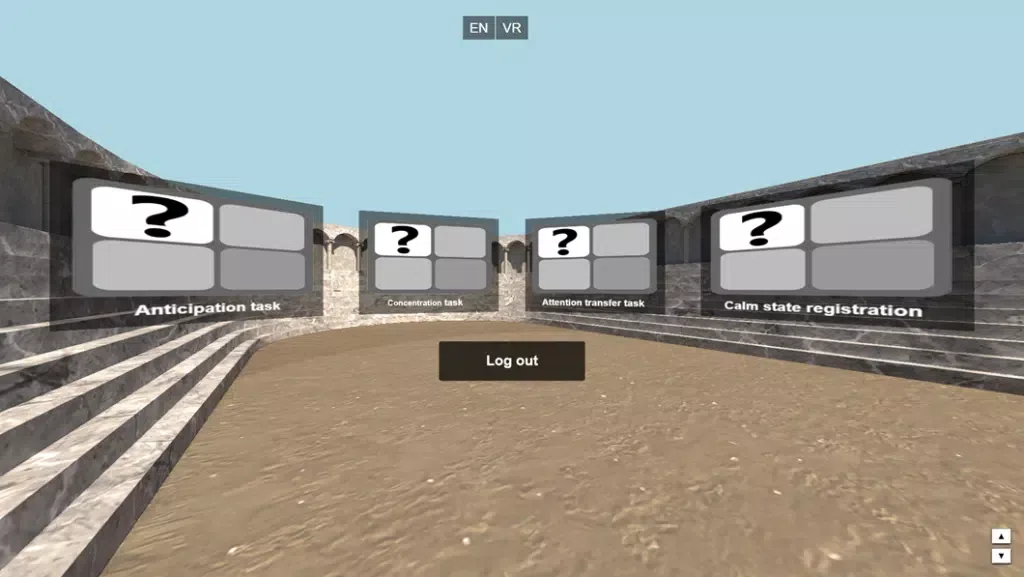
Within the ITEA Cluster project INNO4HEALTH, she led a team that developed a software to assess an athlete’s cognitive skills and improve performance, working with psychologists as well as software developer Optitecha and sports and healthcare startup Lipse. The researchers developed tasks to tackle three types of mental skills needed by competitive athletes: concentration, anticipation and attention transferral.
Democratising brain training
“If he is a tennis player, he needs to anticipate where the ball will be at a certain moment,” says Bikulčienė. “A swimmer needs to start fast. If he is a basketball player, he needs to hone the ability to concentrate despite all the noise going on around him.”
Whilst many teams in the top football and basketball leagues employ full-time psychologists to work with players, the researchers knew resources were limited for lower-league teams and players. They hoped the use of technology could cut the number of psychology sessions by making them more efficient.
Winning funding as part of the INNO4HEALTH project, the researchers tested their software on about 80 elite athletes, including some who practised different disciplines at the Lithuanian Sports University.
The participants could use the software on tablets or computers and were given virtual reality glasses through which they saw backgrounds like an amphitheatre or a solar system and were asked to complete tasks, like anticipating when a ball would cross a line, a relationship between a number or completing a challenge whilst distractions were added in. The psychologists and the players could pick difficulty levels.
The games and scenarios do not resemble the sports the players practise, but effectively trained cognitive skills. Psychologists carried out an assessment and assigned a training programme using the software. The athletes wore Polar wearable belts, which measured their heart rate variability – considered a good measure of stress levels and training readiness – and the researchers followed the participants across a four-week period.
Why the mind is the real game-changer
“We found the athletes improved results in their sport after our training,” says Bikulčienė. “For instance, one professional tennis player moved 100 places up the ranking.” In another example, the men’s Lithuanian biathlon team improved its results in the 2026 Winter Olympics.
The answer to how this success came about might be found in a speech given by 20-time Grand Slam winner Roger Federer to a graduation class at Dartmouth College in the United States. He explained he had won only 54 percent of points across his 1,526 singles matches despite winning 80 percent of matches.
“When you lose every second point, on average, you learn not to dwell on every shot,” he said in a speech that went viral.
Acing the future
The “Cognitive Preparation of Athletes” software, as the Lithuanian researchers have named it, helps to train that Federer mindset of “transferring attention” from an emotional reaction after losing a point to concentrating on the next one.
The software presents options for motivational messages after a mistake is made, such as “go”, “next”, “do”, “work”, “run”, “look” and “now”.
Importantly, the developers think their assessment tool could also be used in the future to keep a check on athletes’ mental state following setbacks in competitions and stressful periods in their lives.
The software is now being sold by Lipse; it is actively used in the training programmes of elite Lithuanian athletes, playing a role in enhancing performance by supporting advanced training methodologies. Currently, the system is undergoing further development to expand its capabilities beyond its original scope, with a particular focus on targeting a wider range of cognitive abilities.
The software also has applications beyond sport. In a pilot on school children aged 10 and 11, teachers found that five minutes of training on the software before a class improved the students’ ability to concentrate. “Cognitive training can help us get better at sport, but also in our everyday life,” points out Bikulčienė.
More information
- Source: https://www.eurekanetwork.org/impact/priming-the-brain-for-peak-performance/
- Website: https://itea4.org/project/inno4health.html
Related projects
INNO4HEALTH
Stimulate continuous monitoring in personal and physical health