

SME in the Spotlight: Adaept Engineering GmbH
Giving machines a common language for the age of AI

In today’s industrial landscape, data is often described as the new oil, yet, for many machine builders and operators, it remains locked away in silos, unstructured and inaccessible. Adaept Engineering GmbH, a young spin-off of the University of Rostock (Germany), is tackling precisely this challenge. The company’s mission is simple but powerful: make machines speak OPC UA - the universal communication standard for industrial interoperability.
"Every machine produces interesting data, like usage statistics, internal sensor data, operational states," explains Fabian Hölzke, co-founder and CEO of Adaept Engineering, "but a lot of machines still aren’t able to provide this data to other systems or users in a universally understood, easy-to-use format."
As artificial intelligence and agentic systems move closer to everyday industrial use, this lack of structured, well-described, annotated data is becoming a critical bottleneck. Without a common language, automation and optimisation efforts on the factory floor with systems from a variety of vendors face a real language barrier. Adaept Engineering bridges that gap.
From research to real-world impact
Adaept Engineering specialises in integrating OPC UA with rich, standards-based semantic data models. This means that machines can not only communicate but also describe their data in a way that is understandable both to humans and intelligent systems.
What sets Adaept Engineering apart is its ability to bring these capabilities even to constrained embedded devices and legacy systems. "Our specialised tech stack and expertise in information modelling allow us to integrate standards-compliant OPC UA on very constrained embedded devices," Fabian notes. "We can also retrofit older machines that were never designed for interoperability."
This unique strength has already positioned Adaept as an emerging enabler of industrial digitalisation and AI-readiness. The company is a member of the OPC Foundation and an official umati partner, placing it firmly within the leading international networks.
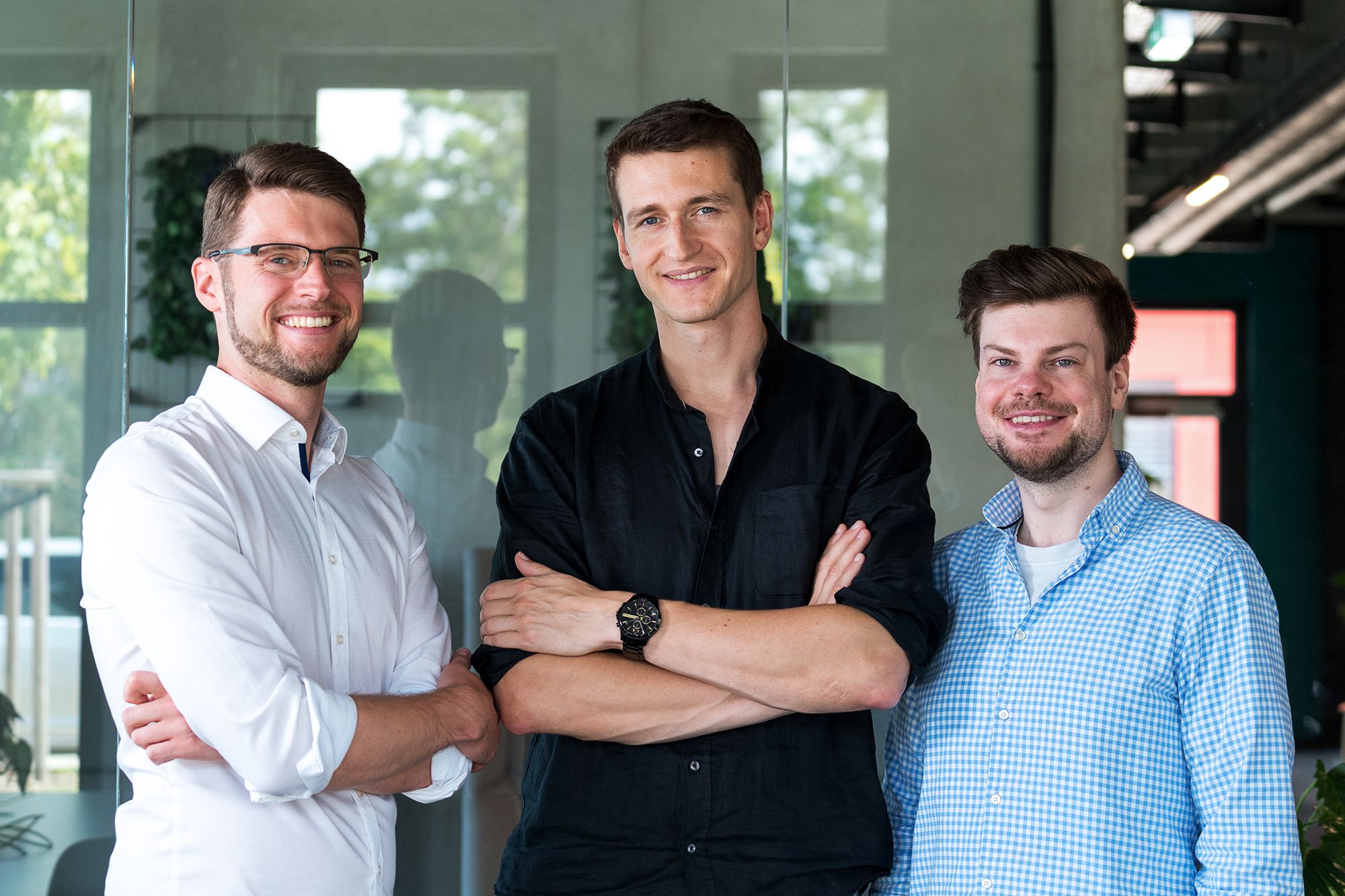
Behind Adaept are three long-time friends and electrical engineers who share a background in industrial research and communications technology. Supported by a network of subject matter experts, they are now preparing to expand their team to meet growing market demand.
From ITEA/OPTIMUM to Adaept Engineering: a research-driven spin-off story
The journey to founding Adaept began during the ITEA project OPTIMUM, where the three founders, Arne Wall, Hannes Raddatz and Fabian Hölzke, worked as doctoral researchers at the University of Rostock.
"The OPTIMUM project gave us the time and resources to explore solutions in close collaboration with international partners from various fields," Fabian recalls. "It helped us understand what the market really needs and what kind of capabilities are required to meet those needs."
By the project's conclusion, the team had gained both technical confidence and a clear sense of purpose: their research outcomes could deliver real value to manufacturers of industrial machinery. That conviction laid the foundation for Adaept Engineering GmbH.
ITEA as a platform for growth and collaboration
After their positive experience in OPTIMUM, Adaept Engineering chose to remain engaged in ITEA as a company. The reasons are clear.
"We value the opportunity for international collaboration – exchanging ideas and perspectives across disciplines and industries," Fabian explains. "As a startup, we're excited to prove ourselves and gain visibility alongside leading industrial players."
ITEA projects offer an environment where companies like Adaept can contribute to advancing the state of the art while simultaneously developing market-ready products and services, which provides a practical competitive edge.
ITEA projects offer an environment where companies can contribute to advancing the SotA while developing market-ready products and services.
AI, agents and knowledge graphs
Looking ahead, Adaept sees great opportunity in the convergence of OPC UA, AI, and semantic technologies. "AI and agentic AI are moving into real production environments. We enable AI use cases by providing well-annotated, standards-based data for training and operation. We also see knowledge graphs gaining relevance, providing a clear, machine-readable description of relationships between data points. This is key for reliable operation of agentic systems acting on data from complex, interconnected machines - the next frontier we're preparing for."
Advice for future spin-offs
When asked what advice they would offer to other researchers or SMEs considering a spin-off from an ITEA project, the Adaept founders are both realistic and encouraging.
"Go for it, but be prepared. Thanks to ITEA, you already have relationships, market insight, and access to advanced technology. Use that to build your first MVP quickly and find early pilot customers who can validate it and define clear success criteria with you."
They also emphasise the importance of listening closely to the market. "Avoid assumptions. Go to trade fairs, networking events, talk to your potential customers, and learn their challenges first-hand. Stay flexible and build a strong network."
With this pragmatic approach and their clear technical focus, Adaept Engineering GmbH is well on its way to turning industrial communication challenges into opportunities - helping machines, and the people who work with them, to finally speak the same language.
More information
Related projects

OPTIMUM
OPTimised Industrial IoT and Distributed Control Platform for Manufacturing and Material Handling